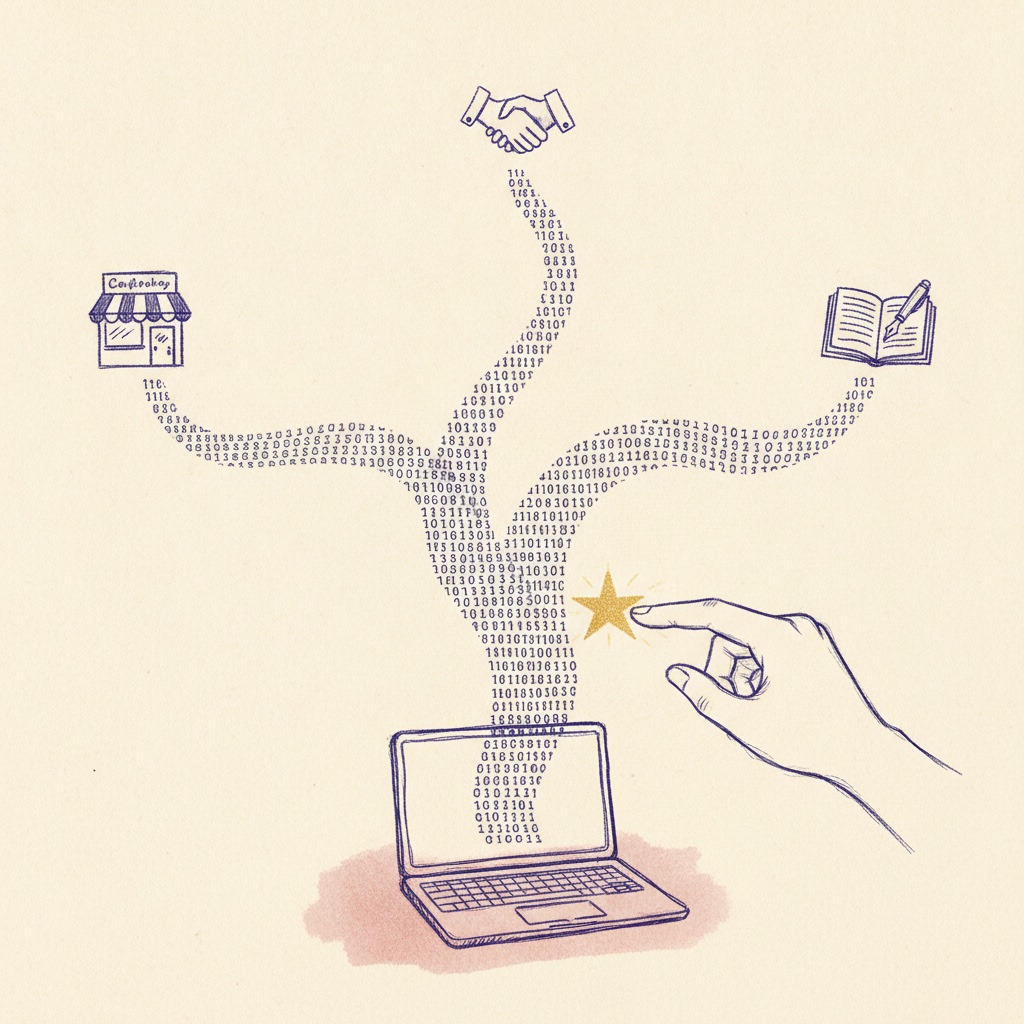
I run a small agency — Campbell Learn — and I’m also a writer, and the thing nobody warns you about owning the business is that those two jobs are really one job wearing different clothes: a daily fight over where my own attention goes.
It started, honestly, because I knew I needed to track my time and couldn’t make it stick. I went and found a tool for it — one of those time-trackers everyone swears by; I couldn’t tell you the name now, which tells you how it went. It lasted about a week. The problem was never discipline. It was friction. Every entry was manual, and I move too fast for manual — by the time I’d stop to log what I was doing, I was already three tasks into the next thing. Starting the timer was the one piece of the day I always forgot.
And underneath the friction was a deeper mismatch: a timesheet answers the wrong question. It asks what I did for a client. As the person who owns the whole thing, the question I actually needed answered was bigger, and a little scary: across the business and the life, where is my finite attention really going — and is that where I meant to point it?
So I stopped trying to track my time going forward and built something that reconstructs it after the fact — from the trail my work already leaves. The whole thing runs inside Claude Code: instead of manual time tracking I’ll never keep up with, I point an AI at that trail and let it read the week back to me. I move fast, but my tools keep perfect records. Everything I do drops a timestamped breadcrumb, already tagged to whoever it was for, and I’d simply never thought to add them up.
Here’s roughly what that looks like when it runs — one conversation that reads the week back to me:
The session, verbatim shape — the machine drafts the week from the trail; a human reads it, corrects it, and signs it. No stopwatch anywhere.
Three claims on my attention
When a week came back to me this way, it split into three — and I’d been blending all three into one exhausted blur:
- The work that pays the bills. Running the agency — the client deliverables, the thing people actually hire us for.
- The work that wins the next work. The calls, the pitches, the “let me pick your brain.” Nobody schedules it, no client pays for it, and it is the entire future of the business. As the owner, it’s my job and no one else’s — and it barely leaves a trace.
- My own work. The writing. This newsletter. The projects that are mine and will never appear on an invoice.
Seeing them pulled apart was the first time I looked at my week as an owner instead of a worker — as a portfolio of my own attention, with me as the one deciding the allocation. Most of what I do, it turns out, has nobody’s name on it but mine.
The business will eat the writer, if you let it
Here’s the tension every owner-operator knows in the body. The billable work is loud — it has deadlines and other people depending on it. The writing is quiet — it answers to no one but me. So when the week gets full, the quiet thing is always what gets cut. And because my own work is the one thing with no client attached, nothing protects it but me.
The reconstruction made that trade impossible to rationalize away. It would show me, in three honest colors, that the business had won the week again. Sometimes that’s exactly right. But you can only answer the real question — was that the week I actually wanted? — if you can see it. For years I couldn’t, so I never really asked.
How the machine changes the math
This is the part that reorganized how I think. I expected AI to make me faster. What it actually did was change the shape of my capacity.
The machine does the labor; I supply the judgment. So the question stopped being “how many hours do I have” and became “how much of me does this actually require, now that the machine can carry the rest?” Work that used to eat a whole day now needs an hour of my attention and a lot of the machine’s. That’s capacity I never had to hire for — and it’s the reason one person can run a business and keep a real writing practice at all. The leverage takes the middle, so my attention can go to the two ends: the deciding and the taste.
✶ The trap
But leverage cuts both ways. When capacity suddenly gets cheap, the temptation is to do more of everything — more clients, more output, more open loops — and a machine will happily help you accelerate in the wrong direction. Leverage without a decision about where to point it is just faster drift. The scarce thing was never the doing. It was the deciding.
So am I billing my hours, or the machine’s?
Which raises the question underneath all of it. When the machine does in minutes what used to take me hours, whose time do I charge for? My answer, and I’m fairly sure it’s the honest one: I bill the judgment, not the runtime. The client isn’t buying the machine’s electricity; they’re buying me knowing what “good” looks like. So the system counts only the minutes I’m genuinely in the loop — hands on, steering — and throws away the time the tool ran without me. Keep the human in the loop, and only charge for the human.
The owner’s math
When the machine carries the labor, the hours you can honestly bill get fewer — and each one has to be worth more. Which means the thing I quietly always assumed — that I’d grow the business by working more hours — is just false. The leverage keeps making my hours fewer. You grow it by aiming your attention better, and by building things that keep earning while your hands are somewhere else.
So the goal was never “more hours.” It’s better-aimed attention, multiplied by machines, and defended from the business’s appetite — so the writer survives the owner.
What it still can’t do
These are field notes, not a sales page, so here’s where it’s honest about its own holes:
- It’s a floor, not a meter. It captures what I can prove. It misses the problem I solve on a walk, the sentence that arrives in the shower. I add those back by hand.
- The owner’s most important hours are the hardest to see. Winning work leaves almost no digital trace — only the calendar remembers it. I had to teach the machine to watch for the people, not the files.
- A human still signs it. Nothing is final until I’ve read the week back and put my name on it. The machine drafts; I decide. Same gate as everything else I make.
I don’t run any of this perfectly. I’m an owner still learning to treat my own attention as the asset it actually is — to spend it on purpose, across a business, a body of writing, and a machine that keeps changing what one person can hold. This is how I’m thinking about it right now. I’ll keep updating the page as the thinking changes.
Questions I get asked
How do I track billable hours without a timer?
Stop tracking forward and reconstruct after the fact. My tools already keep perfect records — everything I do drops a timestamped breadcrumb, already tagged to whoever it was for. I point Claude Code at that trail and it drafts the week: what I made, sorted by who it was for; the minutes I was actually steering, with idle stretches dropped; and who was in the room for each meeting. Then I read it, add what it couldn’t see, and sign it.
Should I bill for the hours the AI works, or only my own?
I bill the judgment, not the runtime. When the machine does in minutes what used to take me hours, the client isn’t buying its electricity; they’re buying me knowing what “good” looks like. So my system counts only the minutes I’m genuinely in the loop — hands on, steering — and throws away the time the tool ran without me. The honest consequence: the hours I can bill get fewer, and each one has to be worth more.
Why does time tracking fail for agency owners and freelancers?
For me it was friction, not discipline. Every entry was manual and I move too fast for manual — by the time I stopped to log what I was doing, I was three tasks into the next thing. Underneath that was a deeper mismatch: a timesheet asks what I did for a client. As the owner, the question I needed answered was where my finite attention was really going, and whether that was where I meant to point it.
What can’t automatic time reconstruction capture?
It’s a floor, not a meter: it captures what I can prove and misses the problem I solve on a walk or the sentence that arrives in the shower, so I add those back by hand. The owner’s most important hours — winning the next work — leave almost no digital trace; only the calendar remembers them, so I taught the machine to watch for the people, not the files. And a human still signs it. The machine drafts; I decide.
— Joe
Field notes · v1 — August 2026. Where my head is: the scarcest asset I own isn’t time or money, it’s attention — split across the business, winning the next work, and my own writing, with a machine now carrying the labor in the middle. What’s next: getting honest about protecting the quiet work from the loud work, and about what “better-aimed attention” actually costs. I’ll revise this as it grows.
