People doing remarkable things with AI, creativity, and the craft of staying human.
Drag the map →


He started in innocence work when finding a client in California's prisons meant forty-five minutes on hold, three names per call. Now he runs the case files through legal AI first, and keeps count of what it still gets wrong.


He polices streaming fraud for the whole music industry, writes first checks to satellite companies, and bought the brewery down the street. The thing he’s never said on a panel: the businesses are the art.


Some days in the 1980s she rode along on her father’s truck-parts deliveries in Chicago, where everyone stopped work to greet him. She kept his eye for relationships, and she is learning to stop proving her value by carrying more.

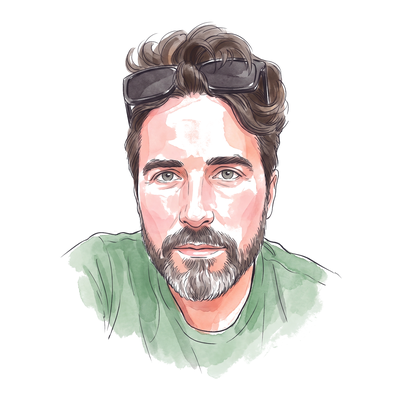
He played Davis Cup for Peru as a teenager and grew up in the shadow of the country’s biggest pop group. At 41 he is back on the court, training like a junior, to close a circle his father left open.


He sells AI education to the universities and watches the employers redraw the rules in real time. On a flight to New Orleans, the one future he couldn’t read was his own kids’.

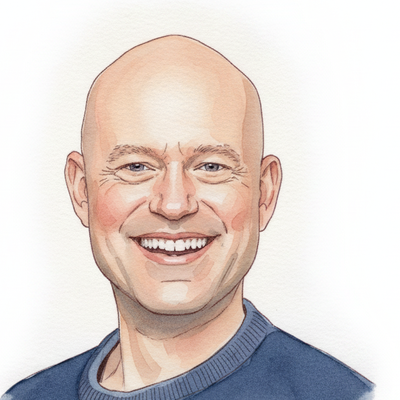
Childhood blackouts in wartime Lebanon taught him that when the lights go out, people tell stories. He built a career on one conviction: the bravest thing a person — or a brand — can do is tell theirs.


He learned to design at eight, on a tablet with no memory that erased everything at unplug. Every artifact since — magazines, enterprise software, AI-accelerated product — has chased one outcome.


Her mother went back to school in 1985, when Teri was seventeen. Teri went back for her master's at 47, and now teaches working adults at the University of Denver, in a year when nobody takes the value of a degree on faith.


He moved out at fourteen, left high school at sixteen, and finishes an executive MBA at Ohio State in May. The habit came from his grandmother on a porch in Kissimmee, and now he is learning to pass it on.

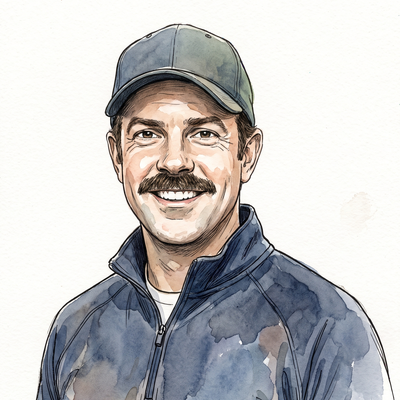
An imagined interview. Handed a ten percent chance of extinction, he believes the number and disputes what everyone is doing with it: Arlene Tiller’s suitcase by the basement stairs, a life on the ground floor above it, and belief as a chore you do on a Tuesday. Read it as a profile or as the full interview.

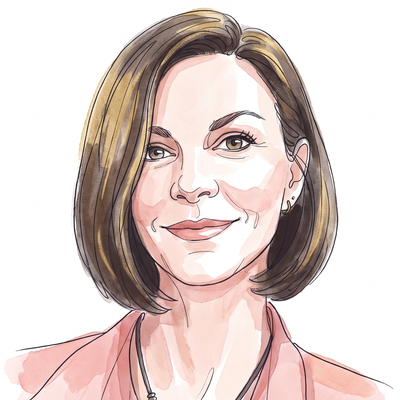
An AI voice agent was answering the calls, and the transfer rate was not where it needed to be. What she did next explains how she leads, what she is willing to admit, and why the most important hour of her day happens before she opens her email.


Every new profile arrives with the Sunday essay.
Every profile goes out with that week’s essay, and subscribers meet each new person first. One email, Sunday morning, from the human in the loop.
Thank you — you’re on the list. The next essay arrives Sunday morning.
 Nicole Brownell
 Kemi Jona
 Ray Martinez