I didn’t run a survey. I ask each person what gets them up in the morning, and the conversation goes where they take it. Ten of the sixteen ended up talking about AI. They include a high school science teacher, the co-founder of a marketing agency, a lawyer who works to free innocent people from prison, and a vice provost who wrote his first chatbot in 1987.
Every quotation below is word for word from a published profile, and some carry the “he says” from the original sentence. I sorted the quotations by subject and wrote the sentences between them. Each name links to the full profile.
None of them said to avoid AI
None of the ten told me people should avoid AI. That includes Kemi Jona, who warns further down about what AI does to students, and Clayton Dean, who told me he doesn’t know what work will look like for his own sons.
Dean is a vice president at Ziplines Education, where he spends his weeks talking with universities and employers about getting their people ready for AI. He won’t predict the future for them, and he still tells them not to wait.
“Waiting,” he says, “is the one strategy I’m confident doesn’t work.”
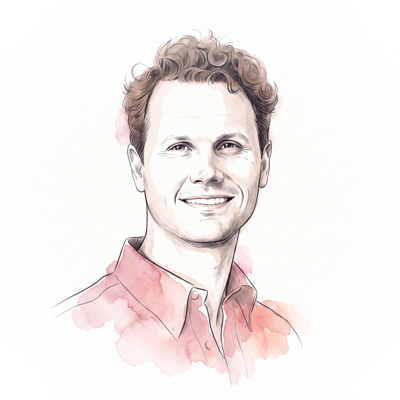 Clayton Dean, VP of partnership and business development, Ziplines Education
Jessica Gutierrez teaches chemistry and physics at Santa Monica High School. She sits on the school’s AI task force, where some of the members joined to keep AI out of classrooms. Her advice to other teachers was short.
“Be open. See how it fits you and your philosophy. Don’t say tech needs to go, AI needs to go — it’s finding the balance that works for you and your students.”
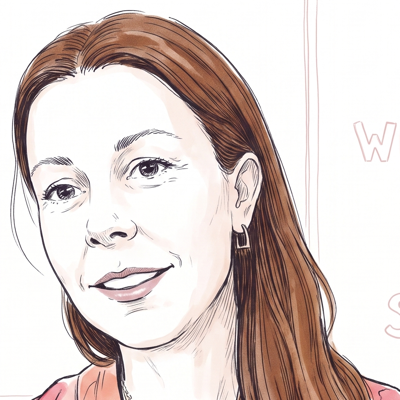 Jessica Gutierrez, science teacher, Santa Monica High School
Ray Martinez helps universities show up when students search for them. He told me that a new technology spreads like wildfire before it settles quietly into everyday life, and that AI is still in the wildfire stage.
“AI is gonna be a useful tool in us shaping our human-centered voice”
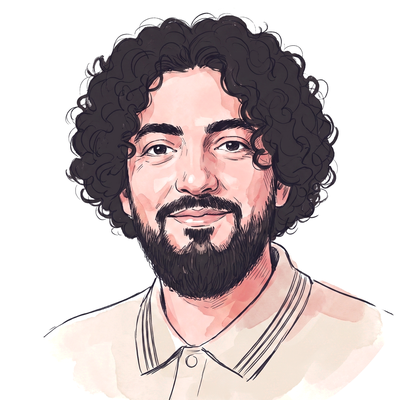 Ray Martinez, VP of SEO, Archer Education
Michael Semanchik runs The Innocence Center, which works to free people who were convicted of crimes they did not commit. He has been my friend for more than a decade. After he described what AI could do for those cases, I told him it was the most hopeful I had ever heard him.
“I’m always hopeful, Joe,” he says. “Come on.”
 Michael Semanchik, executive director, The Innocence Center
Two jobs that AI changed
Two of the ten described a specific change in how they do their jobs. Semanchik’s is in how a lawyer learns a case. The file on an old conviction used to arrive in bankers boxes, and now it arrives as hundreds of PDFs.
“When I started in this work, you would read every single page in a case file,” he says. “That’s how you would start to learn about a case.”
Michael Semanchik, executive director, The Innocence CenterHe no longer starts there. He puts the whole file through a legal AI tool and asks it to lay out what was presented at trial, what was left out, and what is known now that was not known then. The lawyers still read the file, and the AI’s summary tells them where to start.
Teri Markle teaches working adults who are finishing bachelor’s degrees at the University of Denver. About two years ago her students began turning in work written with AI, and her job became catching them at it. She disliked that enough to think about leaving teaching.
“This is not what I signed up for”
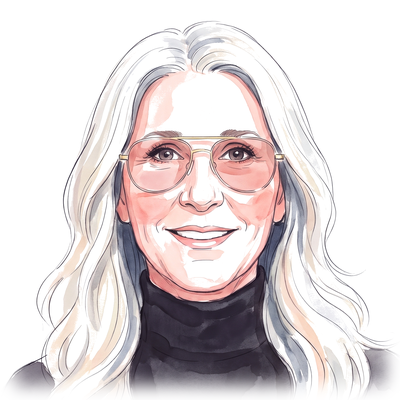 Teri Markle, educator and consultant, University of Denver
So she changed the rule. Her students are now required to use AI in their assignments, and then to tell the class how they used it and where it failed them.
“It’s almost a surprise to students when I say I want you to use this,” she says. “It’s a tool in your toolkit.”
Teri Markle, educator and consultant, University of DenverAI makes the old work faster. Changing the work is the hard part
Kelly Crabb is a growth executive who has led global sales teams. Most organizations, she told me, use AI to do the same tasks faster, and she would have them redesign the work first. Her father delivered truck parts around Chicago and her mother sometimes worked more than one job at a time, so I asked whether AI would have freed her parents from that grind.
“It has the capability to free all of us up out of that grind,” she says. “But I think without properly designing the work, it will just sort of accelerate the way that we are doing things.”
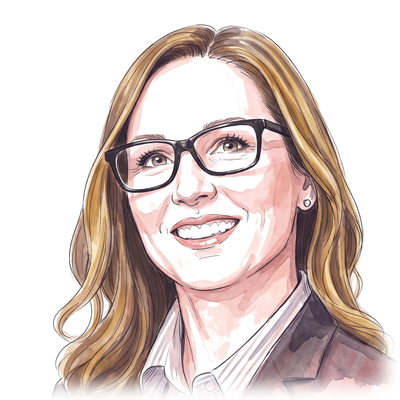 Kelly Crabb, growth and transformation executive
“It’s just a different way of doing more of the same things.”
Kelly Crabb, growth and transformation executiveMatt McGee co-founded Swish, a marketing agency. He practices piano for an hour every day because he believes people only get better by taking the hard route, and he told me that getting real value out of AI is hard in the same way.
“AI is the new hard thing. How do we take this new, widely publicized, technology and actually create value from it, all that is hard problems. And solving those is how you become better.”
 Matt McGee, co-founder, Swish
What they won’t hand to AI
Three of them named a piece of their work that still needs a person.
Nicole Brownell is a managing director at Novo Advisors. Investors send her into companies that are underperforming, and she walks through every department to find out why. The numbers tell her part of the story, she said, and the rest comes from sitting across from someone and watching them.
“That’s where I could read your face and tell, are you telling me the truth? And the machine cannot do that.”
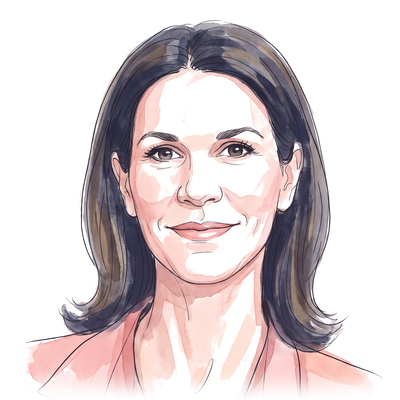 Nicole Brownell, managing director, Novo Advisors
Jourdan Hathaway told me about an AI voice agent her team built when she was at General Assembly. The agent handled admissions calls. It asked a prospective student a few questions and then transferred the call to a person. The dashboard showed far too few callers making it through the transfer, and by that number the project was failing. Her team listened to the calls. The agent was thanking callers before it transferred them, and the callers heard a goodbye. One new line fixed it: we’re transferring you now, please hang on.
“If nobody did the human thing of discernment, we would all be looking at each other and say, It failed. AI is broken.”
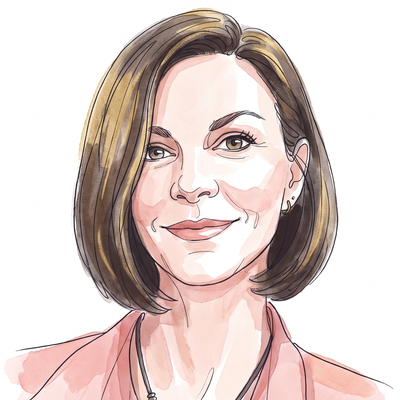 Jourdan Hathaway, chief marketing officer, Universal Technical Institute
Semanchik calls the technology a net positive, and he also keeps count of what it gets wrong. By his count, license plate readers and facial recognition have led police to arrest the wrong people. He also listed what AI cannot do in his cases, like finding a witness or running a DNA test.
“It can help us do a lot of the things, but it can’t do all the things.”
Michael Semanchik, executive director, The Innocence CenterA first job that never got filled
Clayton Dean was the only one who told me about a job he chose not to fill because of AI. An SDR is a sales development representative, usually someone’s first job in sales. Clay and HubSpot are sales software.
“Two years ago I would have hired an entry-level SDR to support our sales work. Today I cover the majority of that work myself with Clay, Claude, and HubSpot. A fraction of the cost, always on, and honestly — better output.”
Clayton Dean, VP of partnership and business development, Ziplines EducationHe said the next part right away.
“I’m not proud of what that means for somebody’s first job. But I’d be lying if I said I’d hire differently tomorrow.”
Clayton Dean, VP of partnership and business development, Ziplines EducationI asked Semanchik what we had missed. He brought up the fear that AI takes people’s jobs, and he imagined it taking his. He can picture AI flagging the problems in a trial as they happen.
“If it took my job away and I had to go do something else, I don’t know that that’d be a bad thing,” he says. “If it means that there’s no more innocent people in prison, then haven’t we all won?”
Michael Semanchik, executive director, The Innocence CenterThree teachers, three different rules
Three of the ten teach, or run teaching: Kemi Jona, Teri Markle and Jessica Gutierrez. Each of them has landed somewhere different on students and AI.
Jona is the vice provost for online education at the University of Virginia. He told me about research on students who use AI to write a paper. Those students get a better grade on the paper, then do worse on a test taken without AI, and six months later they remember less than students who wrote without it.
“It’s a very sneaky sugar high effect”
 Kemi Jona, vice provost for online education and digital innovation, University of Virginia
He worries most about the students who are already struggling. Strong students use AI to go further, he said, and weaker students use it to get around the work they find hard, so the gap between them grows.
“No educator that I know of, and no parent that I know of, likes the idea of a strong get stronger, weak get weaker intervention”
Kemi Jona, vice provost for online education and digital innovation, University of VirginiaMarkle requires her students to use AI and to report on how they used it. Gutierrez teaches her high school students how to ask AI a useful question.
“You can’t just be like, write this paper for me,” she tells students. “It’s: I got an 80 on this test and I want an A on my final. What do I need to study?”
Jessica Gutierrez, science teacher, Santa Monica High SchoolGutierrez is also taking screens away. During the pandemic she rebuilt her students’ science notebooks in Google Slides, and this year she is replacing those with paper notebooks, because a student writing on paper can’t click away to another tab. The district pays for the Chromebooks, and she pays for the notebooks herself.
“If I want notebooks for my students, I got to buy them. And I want kids to write.”
Jessica Gutierrez, science teacher, Santa Monica High SchoolThree of them told me what they don’t know
Jona wrote his first chatbot in 1987, as a senior at the University of Wisconsin. Once he had written the code, he said, the program stopped seeming intelligent to him, and he has looked at AI that way ever since.
“I know what it’s doing back there, and it’s not as smart as you think it is.”
Kemi Jona, vice provost for online education and digital innovation, University of VirginiaHe is sure about the machine and unsure about the damage to students. He wants the country to have something like a National Hurricane Center for AI, an agency that gets supplies in place before a storm arrives.
“Once it hits, it’s too late,” he says. “We don’t yet really have a feel for how bad it is.”
Kemi Jona, vice provost for online education and digital innovation, University of VirginiaGutierrez has taught for eighteen years, and she uses AI to plan her lessons. Some teachers would call that cheating, and she doesn’t know whether they are right.
“I never know if what I’m doing is right or wrong, or if I’m cheating”
Jessica Gutierrez, science teacher, Santa Monica High SchoolDean was on a flight to New Orleans, reading about a private school where an AI tutor teaches the students for a couple of hours a day. He advises universities and employers on the future of work, and on that plane he realized he could not say what his own sons should prepare for.
“I do this for a living. And I don’t know.”
Clayton Dean, VP of partnership and business development, Ziplines EducationHis boys are young enough that the world they will graduate into hasn’t been built yet.
How to read this
The ten were not asked the same questions. What they said came up in conversations about their lives and their work between August and November 2026, so the quotations cannot be compared the way survey answers can.
Six of the sixteen profiles do not quote the person on AI. I can’t tell you what those six think about it.
From the next profile on, I will ask every person the same two questions, and I will add their answers to this page.
What is one thing AI changed about your work this year?
What is one thing you will not hand to AI?
— Joe