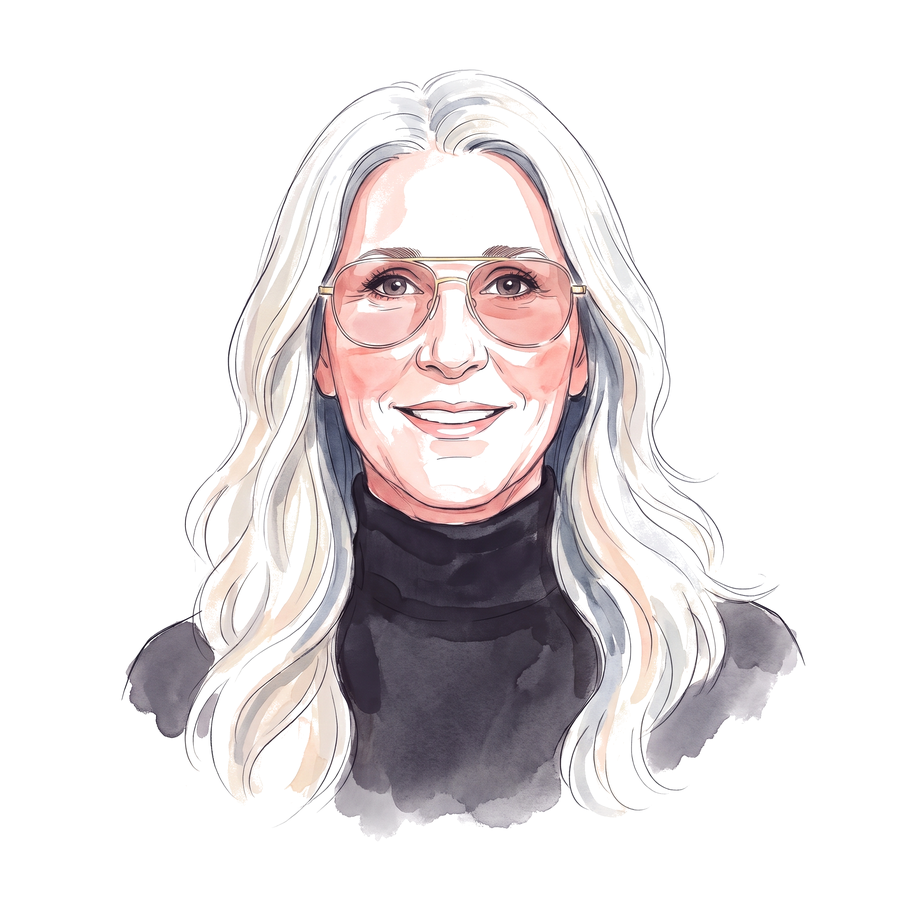
Teri Markle was about seventeen when her mother went back to school. Sharon had stayed home to raise three daughters in the Pacific Northwest, and with all three of them in high school, around 1985, she enrolled for an associate’s degree in computer programming. Markle remembers the straight A’s, and not much else about what it took.
Education was not optional in that house. Neither of her parents had finished college, which made Markle a first-generation student, a label she never heard applied to herself until she was an adult. What she heard instead, over and over, was her mother’s sentence, and she still says it in her mother’s cadence: “No matter what happens in your life, the challenges that come your way, no one can take that education away from you. That is something that you own completely.”

Sharon went to work for the State of Washington on the associate’s degree and kept getting promoted, into management and then leadership, with very little ego about any of it. She never went on to a bachelor’s and she never talked about herself, so her daughters took the whole thing as ordinary. She had always been strong in math and accounting, and that is as far as Markle can get on why it was programming. “I wish I could ask her now,” she says.
Markle went the other way around, college first and then business finance at a blue-chip corporation, in rooms that in 1994 were mostly men. That year she was expecting her first child, and she can still quote her boss’s answer when she told him: “Well, that’s just not convenient. That’s right in the middle of fiscal year end.” She told him she would have everything done before she was out, had the baby, and kept the career. “Can you imagine hearing that now?” she says. She raised four children and has two stepchildren, and somewhere in those years she moved from the corporate world into higher education, a turn she describes as accidental.
Then her mother died. Sharon was 70 and had been sick for a while; Markle was 47 and felt it acutely anyway. Grief, she says, makes you take stock of what a person taught you, and what she kept coming back to was the degree. She decided, in that moment, that she was going back for her master’s, and that she would finish before she turned 50.

Going back taught her what she had missed at seventeen: the commitment her mother had made, and how rare it was to stay home with your children and then build a full career anyway.
“I wish I had reflected that more to her at the time.”
The students she teaches now are making the decision she made, most of them younger and with no less in the way. Markle teaches bachelor’s completion courses at the University of Denver, where she was an associate dean for years and taught on the side. In what she calls this new chapter, the teaching has moved to the center. Her students are working adults, most of them between 30 and 45. One wants the children at home, old enough now to be weighing their own next step, to watch it get done. One has had life get in the way a dozen times. One is after a better living for the family. The common thread is that nobody sent them. “No one’s telling the student to do it,” she says. “It’s not a check-the-box experience.”
Her courses in leadership and organizational behavior put students to work on a real project for a real employer, so what they learn in class gets tested on a company the same week, with the employer giving feedback as they go. The part she enjoys most is when a student pushes back. Someone stops and says, wait a minute, this theory is not translating into what is actually happening out there. That is the student working out for themselves which pieces of the theory hold, and it is the moment she teaches for. “The light bulb moment for students is where professors really get energized,” she says.
She is less certain the degree they are earning still carries its old guarantee. Students are savvy customers now, she says, and many of them have made up their minds about a school, by asking AI, before they ever talk to it. The old bargain was never written down. A bachelor’s got you a better job, a master’s a better one, and nobody asked for proof. Students ask now, and the proof is hard to produce. “I don’t think anyone disputes the value of learning,” she says. “I think it’s the value of the outcome tied to that learning that’s under a lot of pressure right now.”
“It’s not just an unspoken promise anymore.”
She believes the value is still there, and she thinks the reckoning higher education is going through is happening for a reason. About two years ago she went through a small one of her own. When AI first showed up in student work, she taught a course in which her job became policing it. She disliked the work enough to think about leaving teaching. “This is not what I signed up for,” she remembers thinking.
So she reversed the course. Her students are now required to use AI in their assignments and then to account for it in class: how they used it, where it failed them, and where the judgment still had to be a person’s. The instruction still surprises them. “It’s almost a surprise to students when I say I want you to use this,” she says. “It’s a tool in your toolkit.”
She is building a critical communication course for the winter on the same principle. The theory stays and the traditional model stays, she says, and the course keeps moving toward what the student needs and what the employer is asking for. The people who sign up for it will be somewhere between 30 and 45, with jobs and children and a dozen reasons to have waited. Nobody will have sent them. Some of them have a teenager at home who is watching and does not understand it yet.