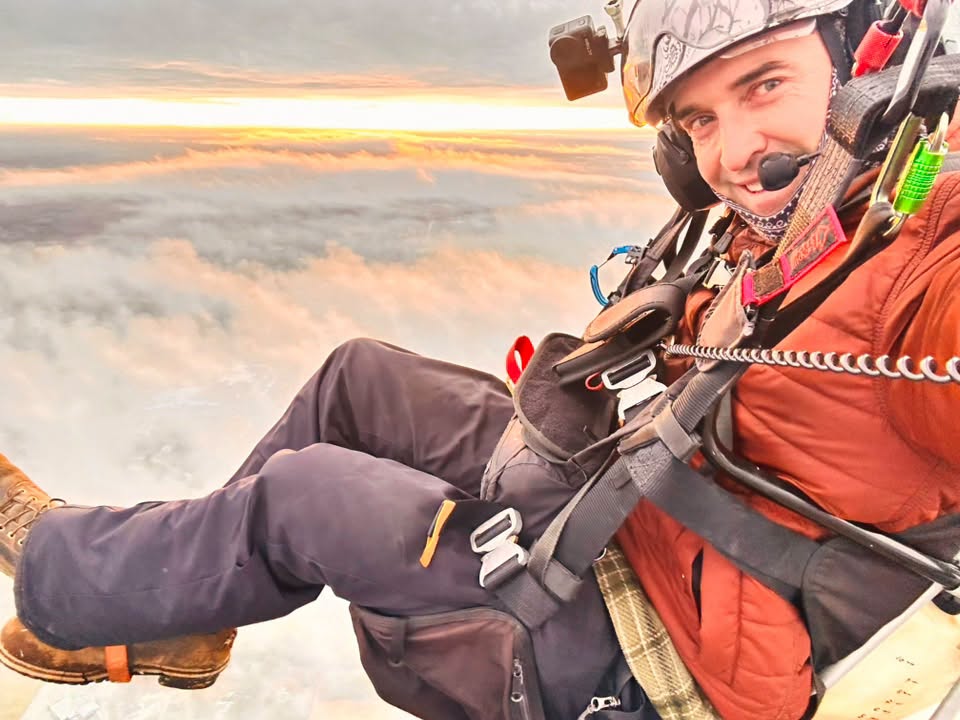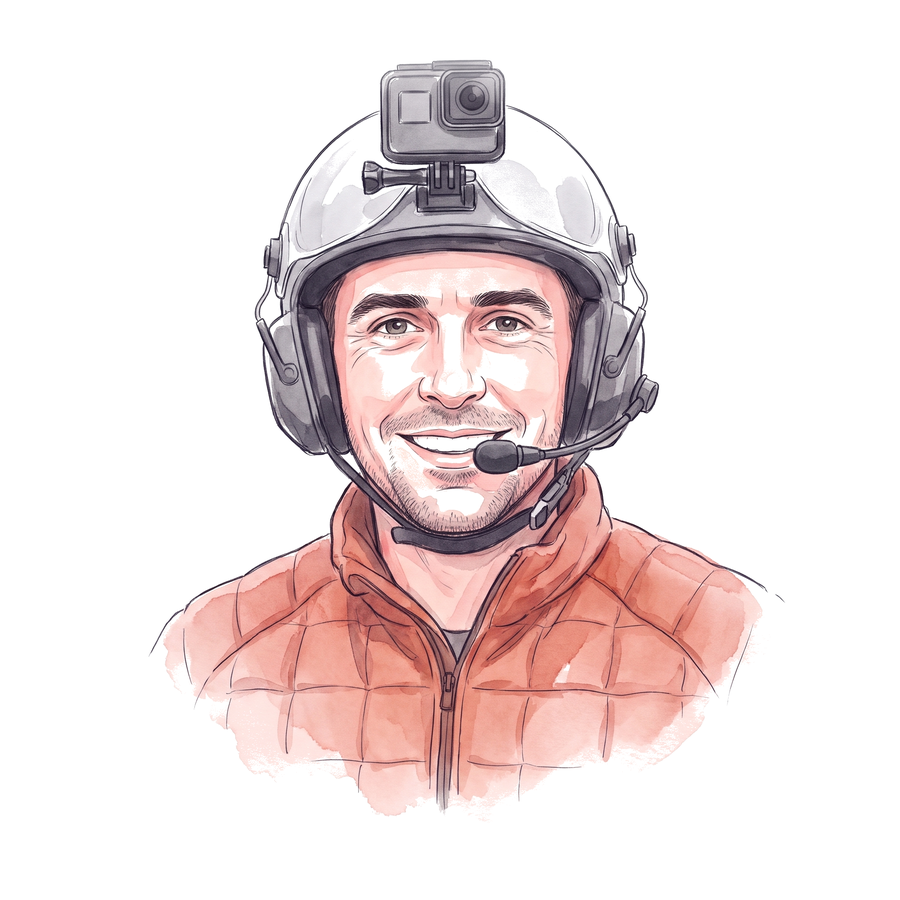
On a morning when the air is calm enough, Jeff Flanagan lays a paraglider wing out behind him in a field, powers up the motor strapped to his back and starts to run. The wing fills and comes up over his head, the motor pushes him along, and for a few more steps he is still a man running through a field. “And before you know it, you just walk into the sky,” he says. “It’s like a superpower.”

Flanagan cuts trees for a living in Clinton, Massachusetts, and for more than two years he has flown a paramotor, which is the wing and the motor together, in the first hour of daylight before he has to be at work. I asked him what gets him up in the morning, which is the question I ask everyone, and he did not need a second. “I’d say adrenaline.” He compares it to a drug, something he needs. He has wanted it since he was a boy, and for most of his life he went looking for it close to the ground.
School was the part of the day he had to get through. “To me, it felt like prison,” he says. He would sit there thinking about getting home and getting on the dirt bike, and what he found on it, along with the noise and the dust and the jumps, was a word I did not expect from him, which was freedom. His older brothers had three-wheelers, and then came four-wheelers. At the old landfill he hit a jump his friends on quads told him he would never make, and when they measured it, it was 80 feet. Near High Bridge he took down two full-size oak trees and spent months of afternoons digging out a stump so he could jump a cut in a cliff. I grew up in the same neighborhood and watched him try it, and for years I remembered that he landed it. He came up about three feet short, went over the handlebars, and the machine rode over him.
Then the places to ride went away. “They’re building houses everywhere and everywhere we used to ride is gone,” he says. Tree work took the place of the quads, and it took him higher. He has been a climber for about 20 years, and he says that halfway up a tall tree there is a point where he looks at how high he is and how much higher he has to go and thinks it is crazy. He keeps going, and on the way back down the same spot is nothing. “You have to be able to work around your fear,” he says. From the top he could see Boston, and he would tell the crew on the ground about it. “And I’m the only one seeing it,” he says. “And I wish that they could see it.”
“We do a lot of dangerous stuff safely, if that makes sense.”
He got interested in paramotors online, and when he brought it up with his brother, his brother said he had been watching the same thing. Flanagan wanted to take the course, which runs a week. His brother said they did not need it. “Yeah, I think we do,” Flanagan told him, and then he bought a glider and a motor anyway, and the two of them walked out into an open field behind Bolton Orchards and taught themselves: flying the wing like a kite, then running with it, then running with the motor on their backs, then everything but leaving the ground.
When they were ready, Flanagan asked who wanted to go first. He has always been a little crazier, he says, so his brother told him to go ahead. Just over the treetops a gust pushed him sideways, and because a paramotor has to land into the wind he could not simply turn around. He climbed to about a thousand feet, circled, came back and landed on his butt. His brother, who was supposed to go next, asked how it was, heard the answer, and decided against it. “All of a sudden you’re up in the air with something you taught yourself,” Flanagan says. He felt he should not be there. He went up again on the next calm day. “I don’t want to do it and be scared of it.”
He has more than 300 flights now, and what he talks about is what he sees. He has lived in the same town his whole life, and from the air he can pick out every road, his own house, the dam, the school he could not wait to leave. “Everything from one seat, one seat in the sky,” he says. He has headphones on and music going, and below him are the cars heading to work, the traffic jams, the school buses, the trash truck, people going about their business while he watches from what he calls a different world. “I talk about adrenaline, but calming at the same time,” he says.
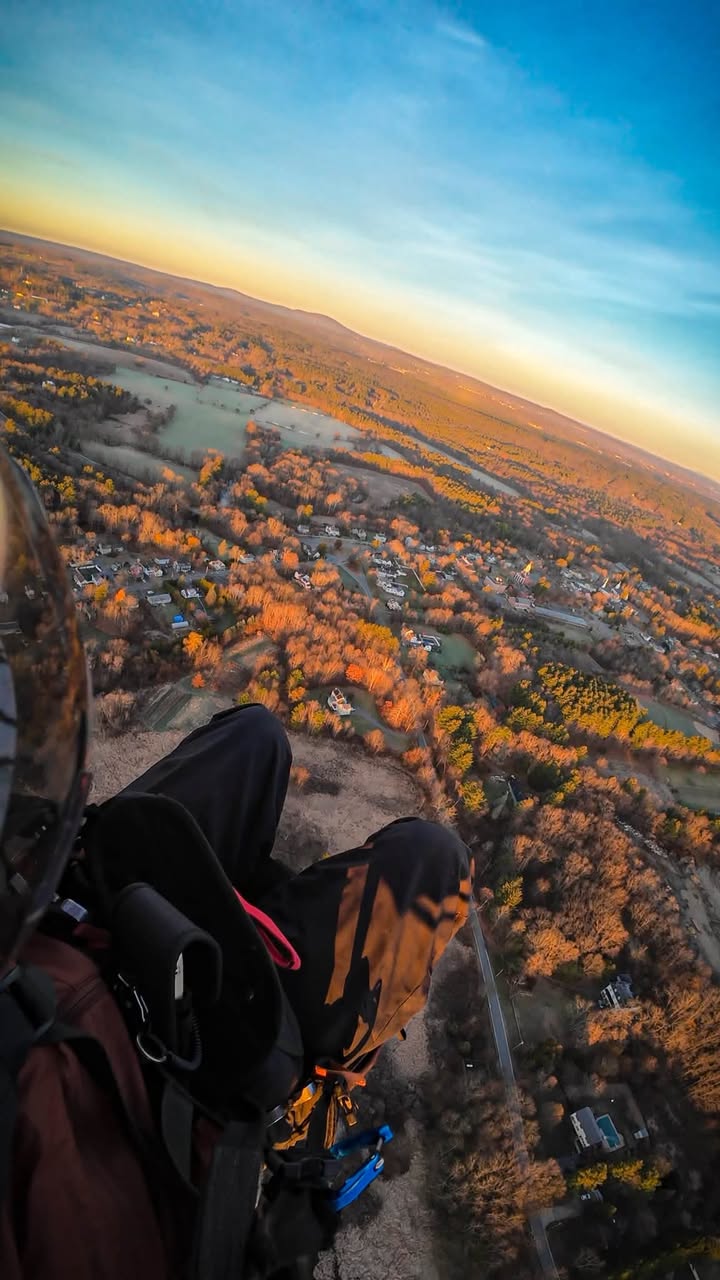
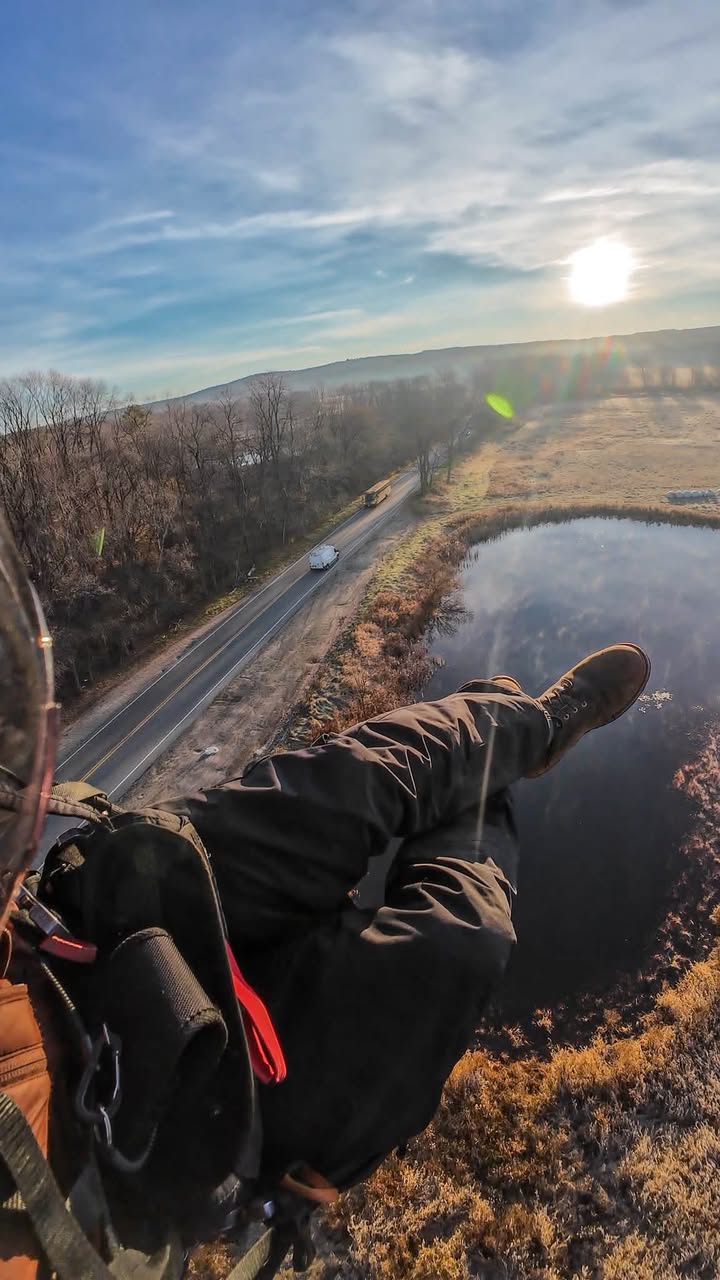
“When you go up in the air and you look down on it, it’s a view nobody’s ever really seen.”
I asked what it would have done to him, as a kid in our neighborhood, to look up and see a man flying over. He said it would have gotten his mind going, thinking and planning, wondering whether he could do that. He thinks there are kids in town looking up at him now, though he says he has never given it much thought.
The flights he looks hardest for are the ones that get him above the clouds. The air has to be calm and the clouds have to be low and broken, so that there is a way up and around them, and a day like that is hard to get. When it comes, the ground is moving under him at one speed and the clouds are moving at another, and he sits over both. He calls it a third dimension.

One time he broke the rule. A pilot is not supposed to fly into cloud, and on a dreary day he went straight up through it and came out the top into the sun. The clouds were underneath him, white and puffy. It was warm, and it was calm, and on the ground it was raining. He calls it one of the best experiences of his life. “It was like you didn’t want to go back to Earth,” he says. “It was like you died and you went to heaven.”